DAY 4: From Standstill to Summit Push
When we got up the next morning, the rain had stopped but the sky had turned gray and moody again.
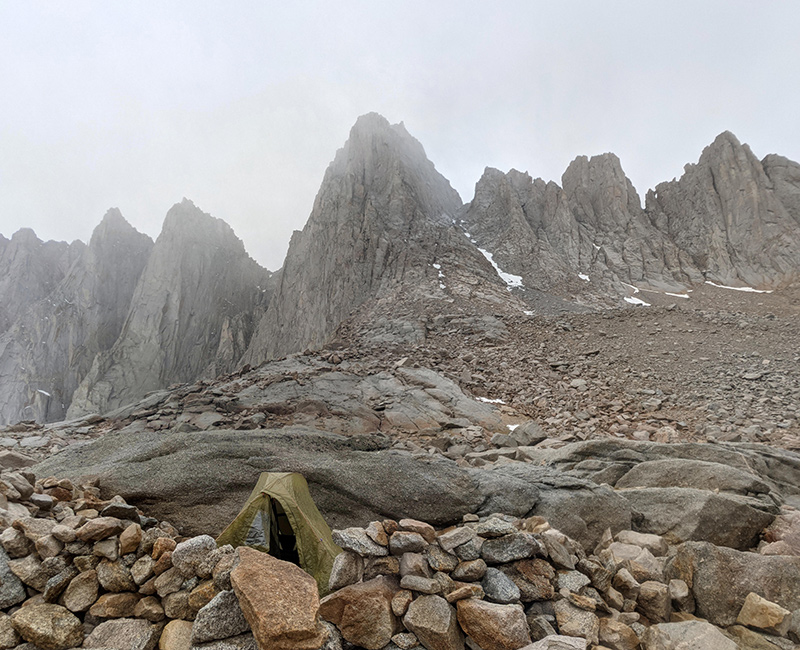
The real concern came from the only other group up there that day — three rock climbers planning to do the East Buttress. Somehow, they’d gotten word from the ranger station that lightning had sparked a fire overnight and everyone was being ordered off the mountain. We couldn’t believe it.
Confused, frustrated, and pretty disappointed, we reluctantly began packing up, knowing it would take hours to descend and unsure of what we’d be walking into. Just then, the other group yelled over and said the rangers wanted us to stay put. It was safer up here. That made a lot more sense, given we were well above treeline. Our next question was, for how long and what should we do while we wait?
Let’s go for it
By the time this all played out, nearly two hours later, the sky had gone blue and the sun was shining brightly. That made the decision obvious: let’s go for it! We noticed the other group thought the same. Disappointment quickly turned to excitement as we realized no one else would be heading up today.
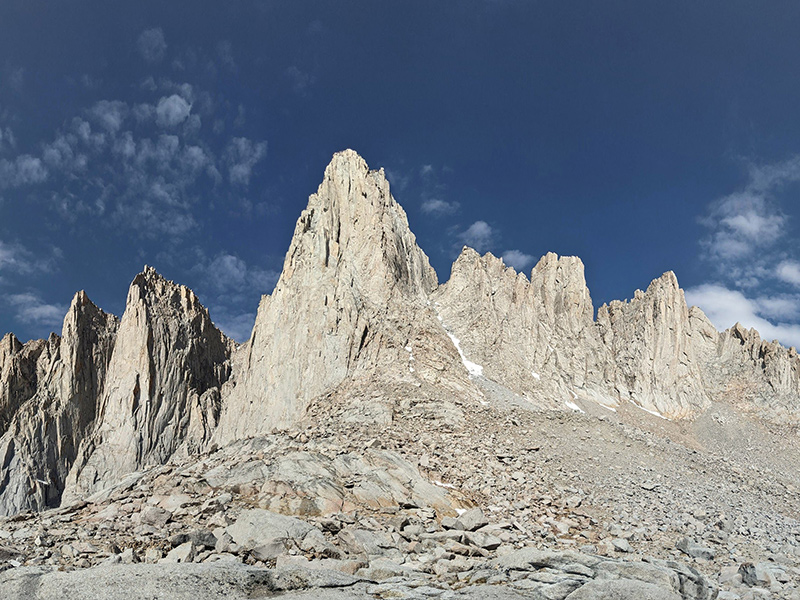
Oliver and I quickly reorganized our gear and started our push toward the summit at 9:30a.
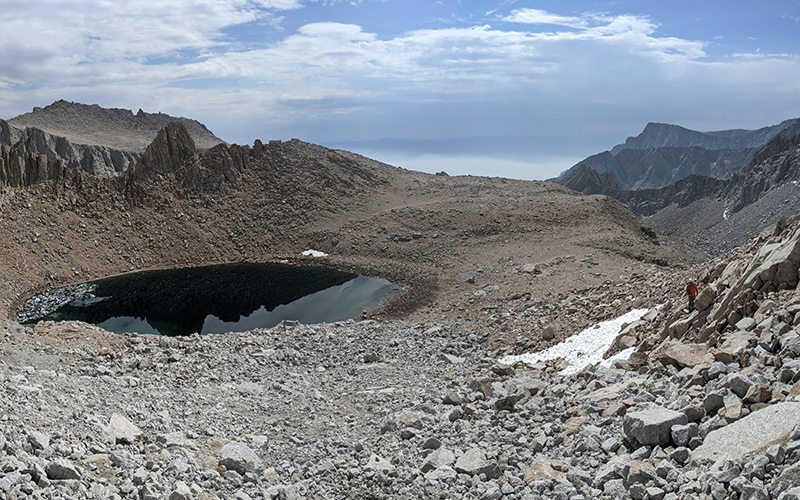
The sky was messing with us but we continued on.
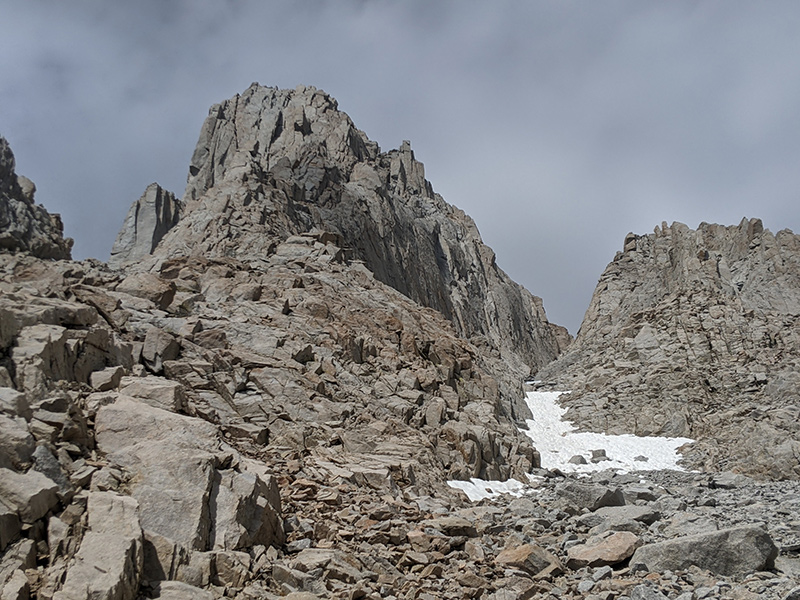
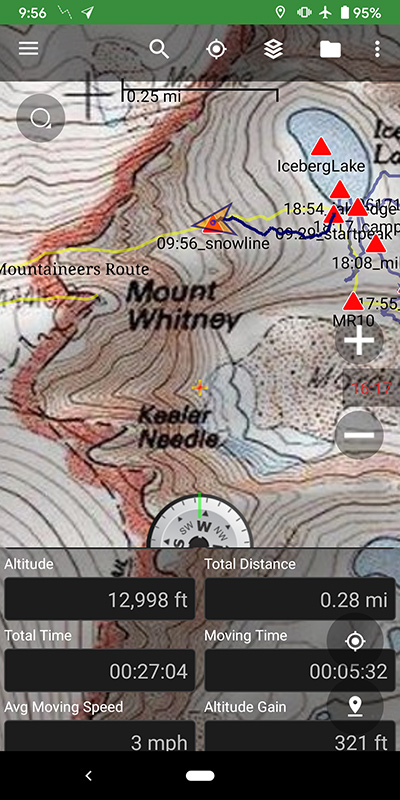
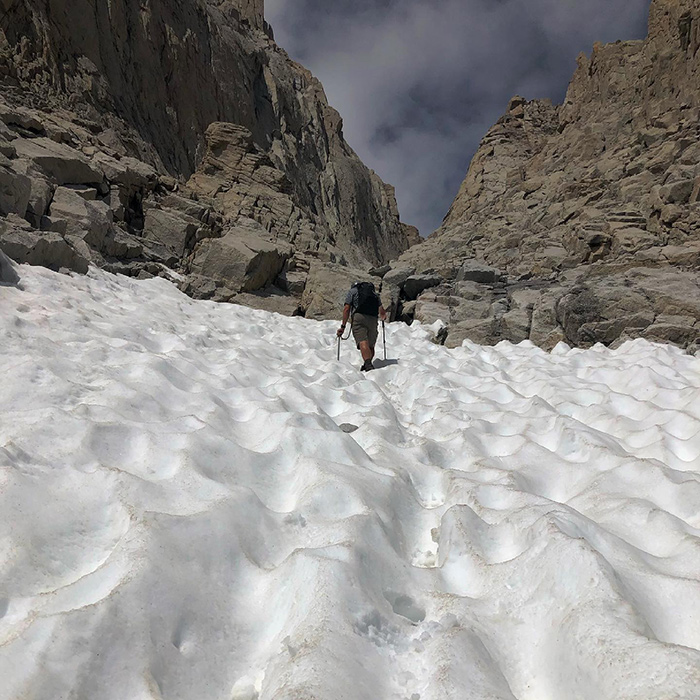
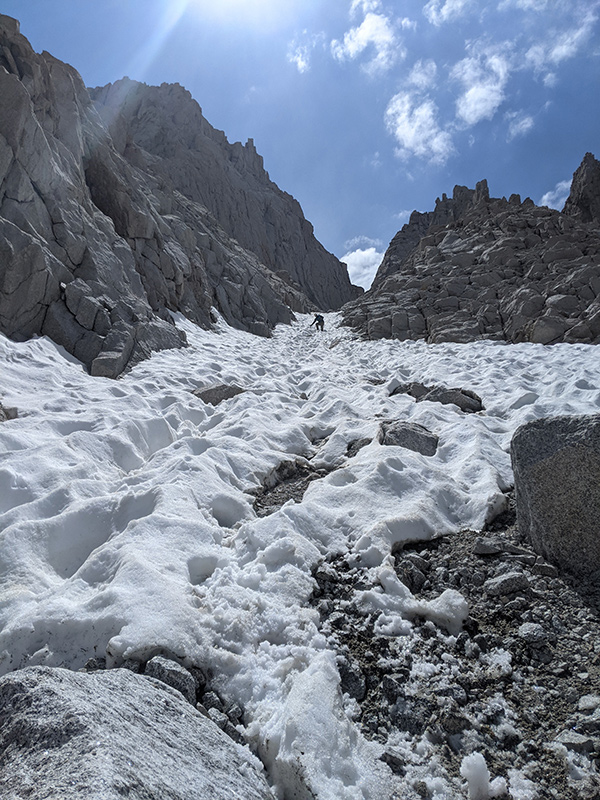
Thirty minutes later, we hit the snow line at 13,000 feet, a quarter mile up from camp.
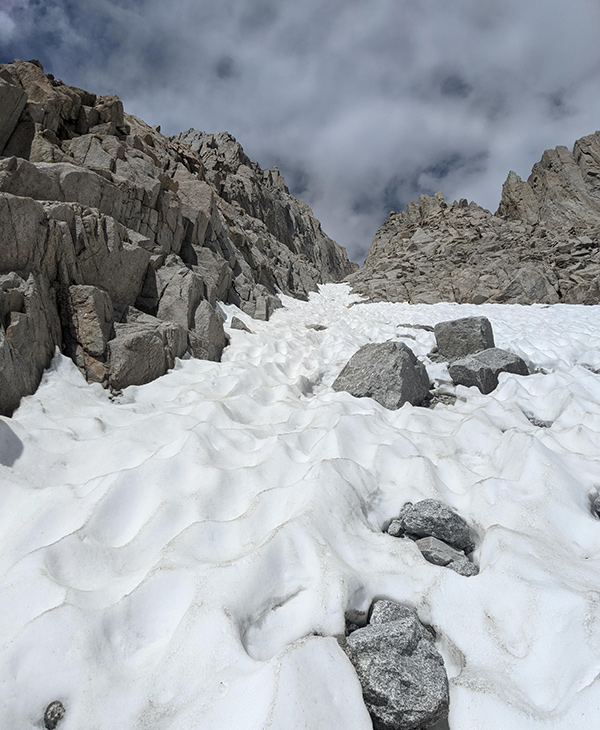
Both of us wished there was more snow in this couloir to give it that true mountaineering experience.
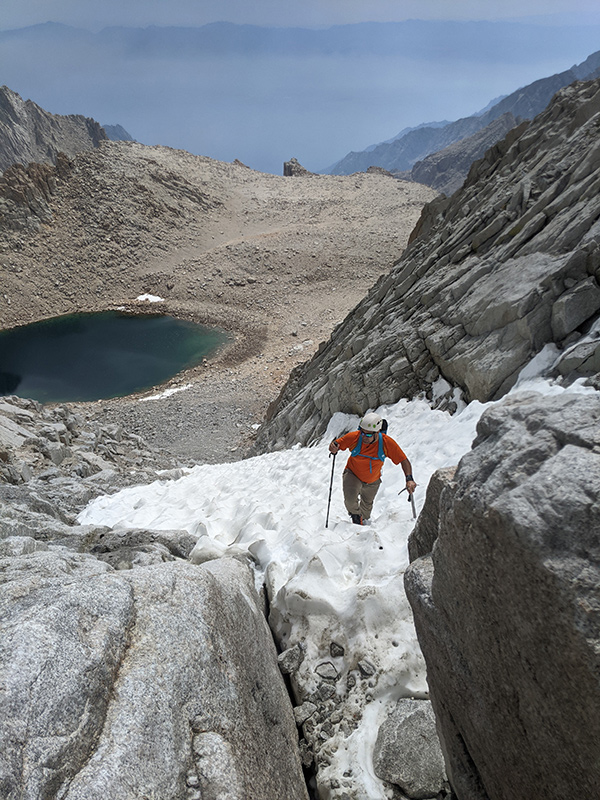
We could hear the climbers above and stayed alert for any falling rock. They were aware of us too, and caught glimpses of each other now and then. Before long, they moved ahead and removed the risk.
The Notch
As we approached the Notch, it was obvious the lack of snow meant it wouldn’t be the crux today.
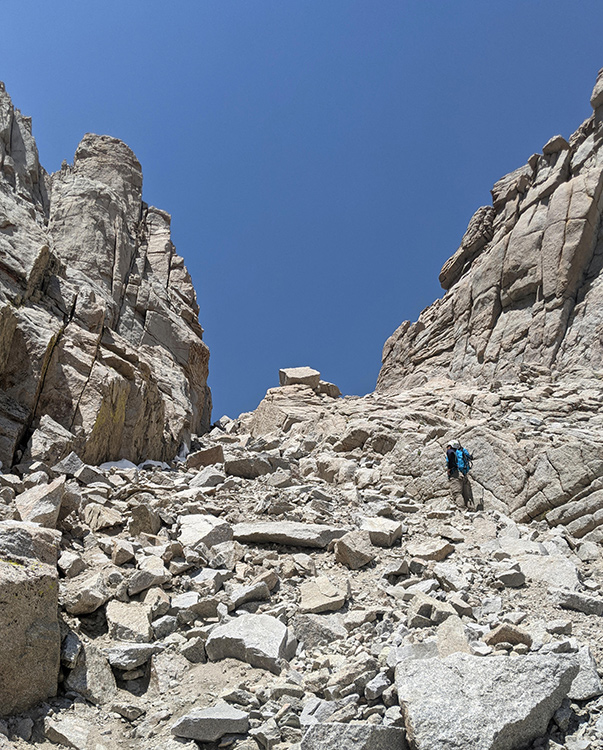
Looking back down the route, it was cool to be here, but definitely wanted it to be more adventurous.
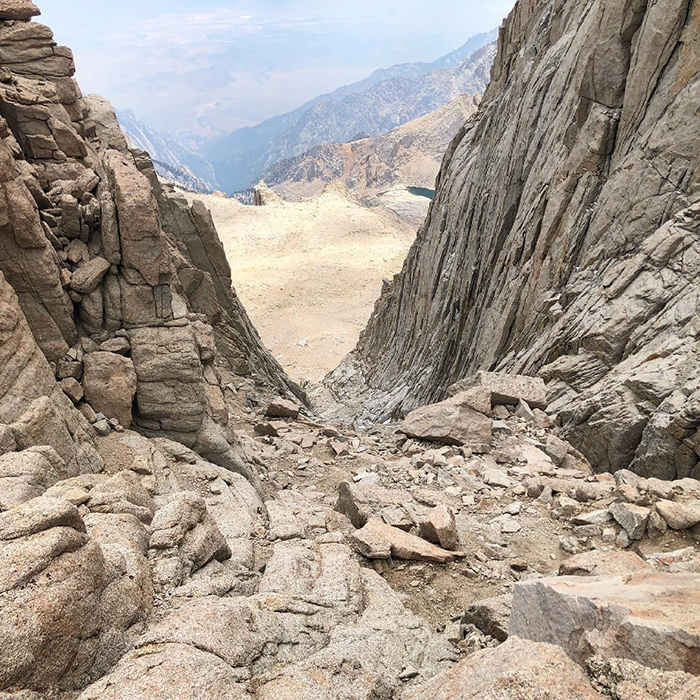
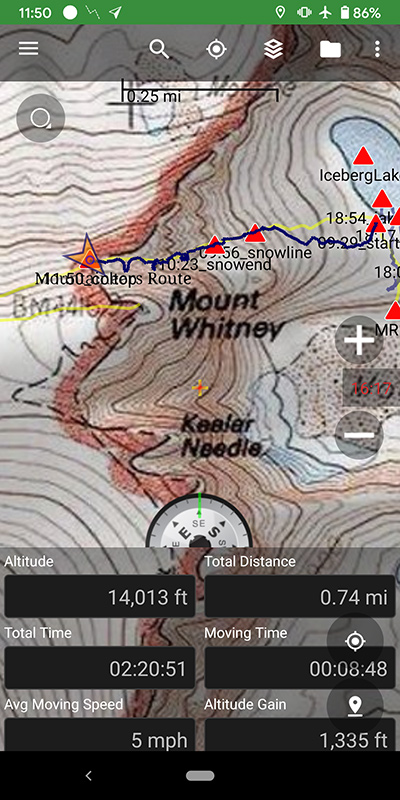
This Notch sits at 14,000 feet, 1,300 feet above our starting point and three-quarters of a mile away.
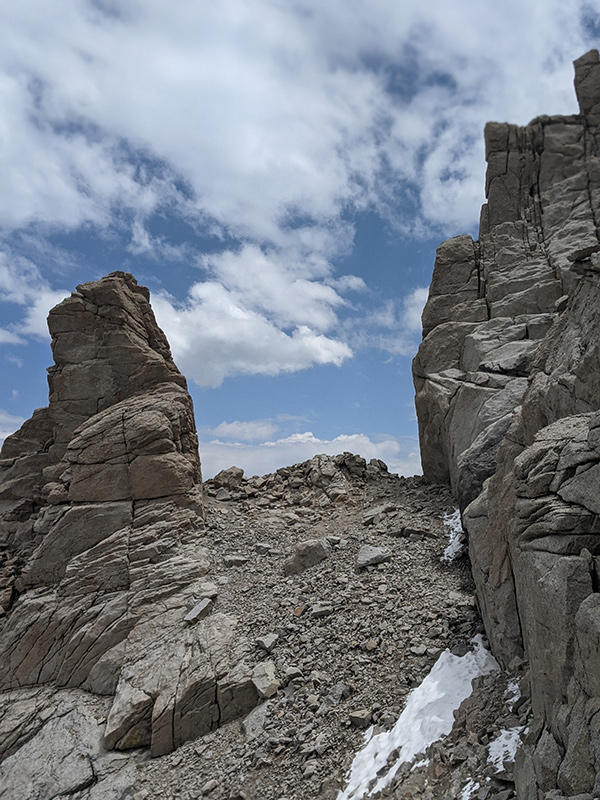
The only part that made me nervous was the traverse across some ice and loose rock immediately after.
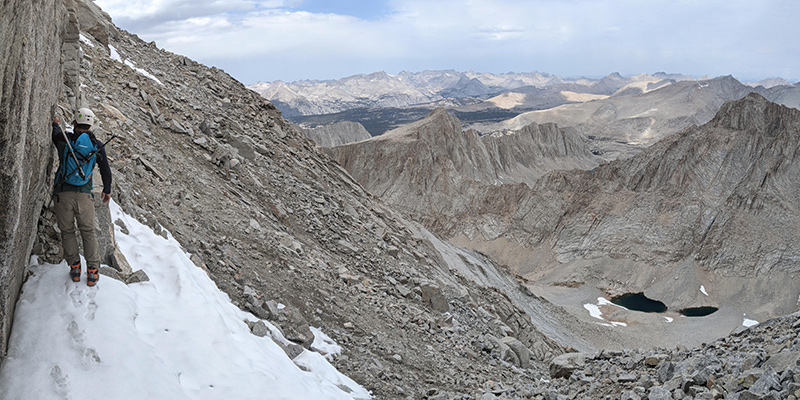
Here’s looking back at that short section. In harsher conditions, this would definitely be a no-fall zone.
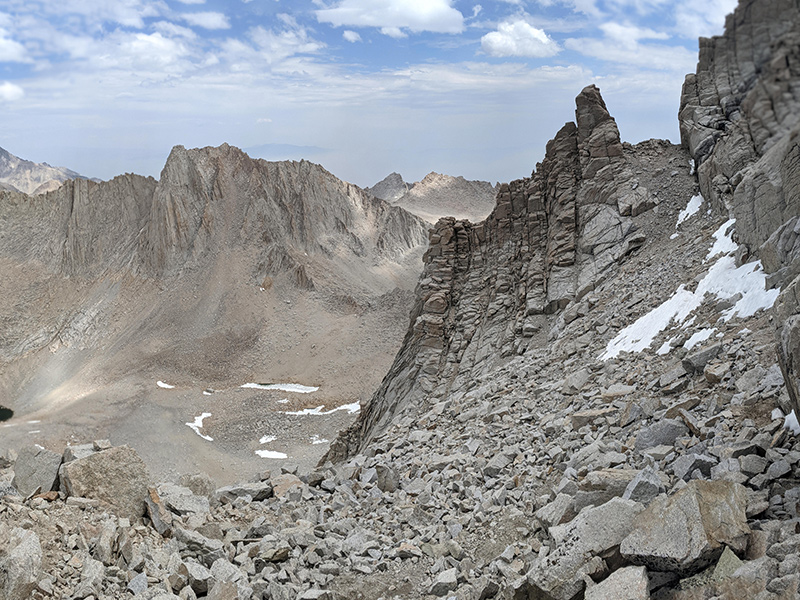
The Summit Push
The only thing left was to find the chute to the summit. Since neither of us knew exactly what to look for, we kept heading west until it felt comfortable to turn uphill.
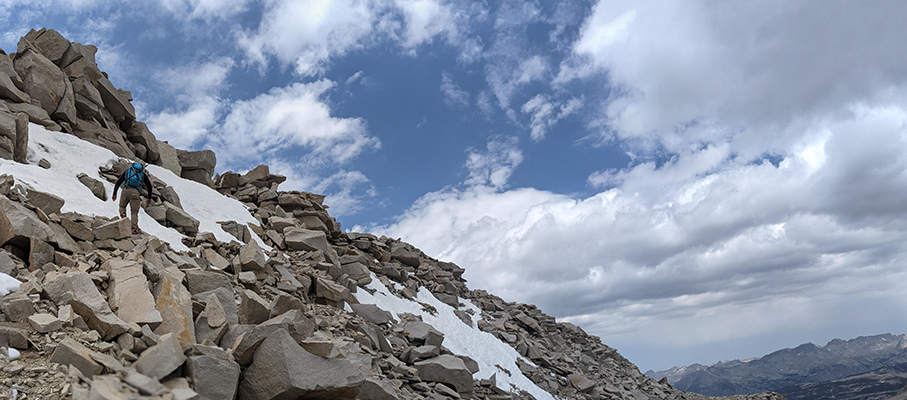
Only after looking at a map later did we realize we were off by a little (the green line was the chute).
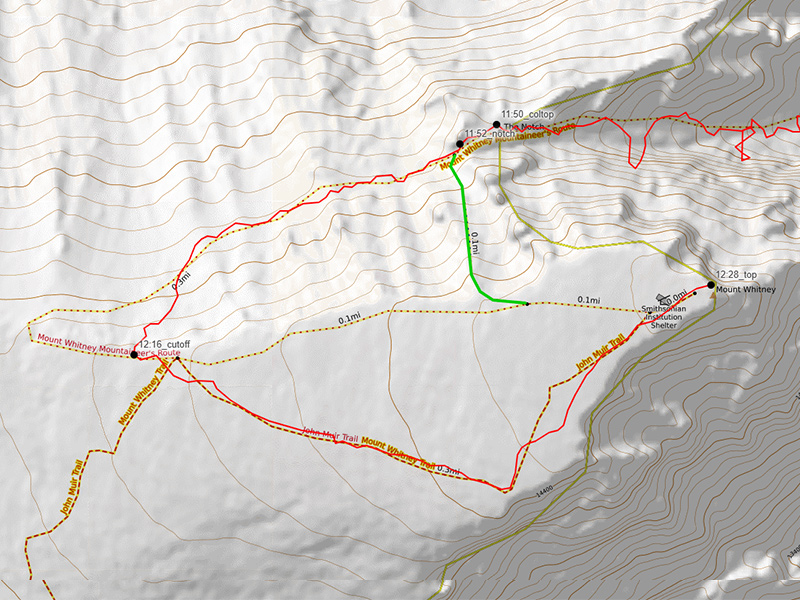
Oh well — we linked up with the John Muir Trail and walked straight to the summit.
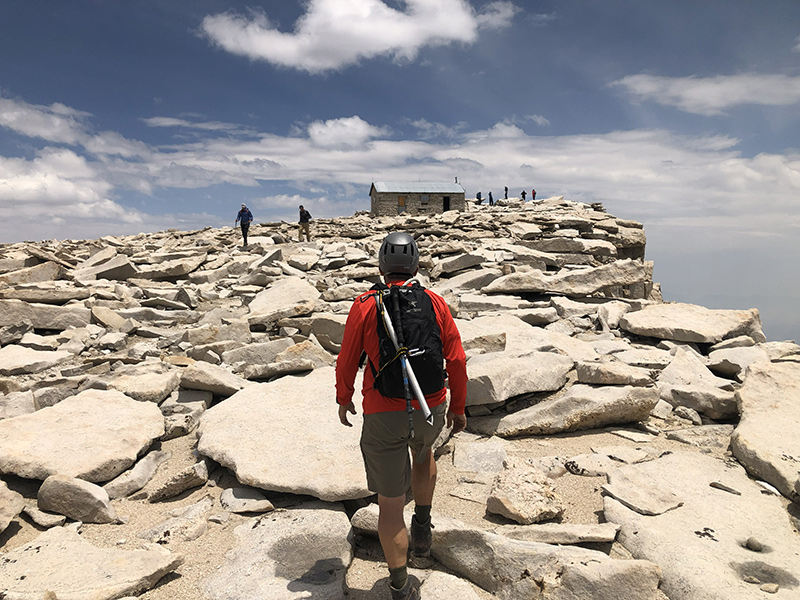
Three hours later, after climbing just over a mile and 1,800 feet, we stood atop the highest point in California as well as the lower 48, both for the second time. Despite my GPS reading, we were at 14,5.
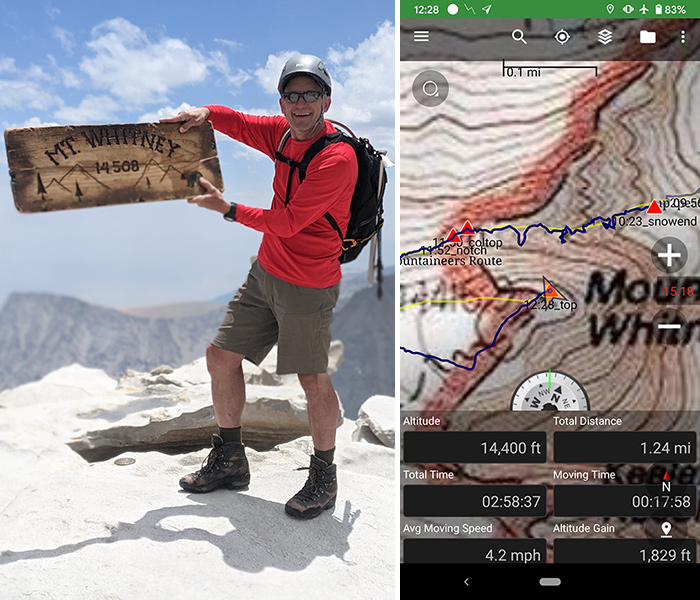
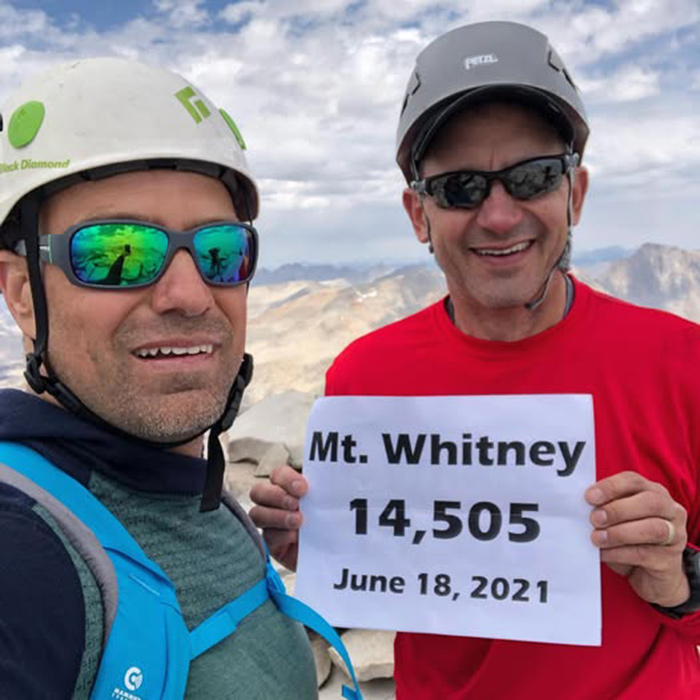
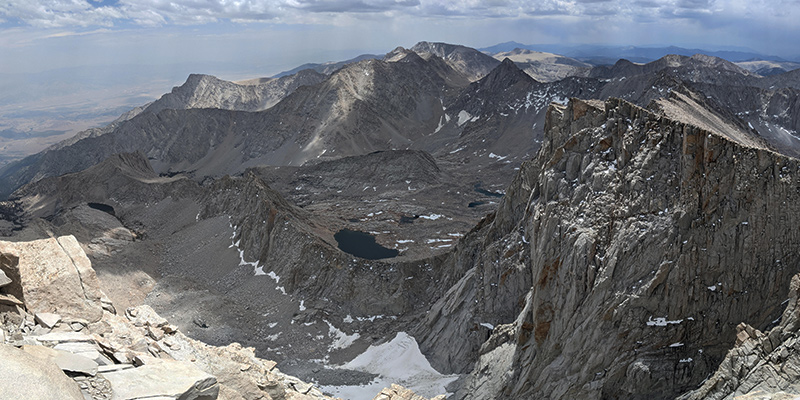
We snapped our summit pics and peered over the edge to our camp down below.
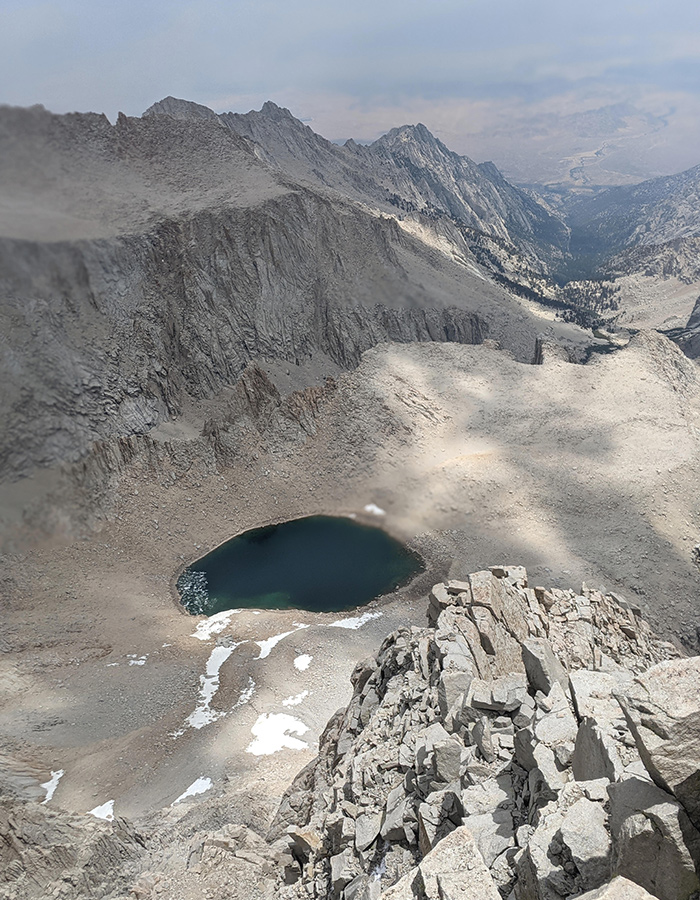
Pinnacle Ridge is still my favorite view from up here. Last time we came up from the right (south) side of those lakes in the distance, but this time we followed the moraine up the left (north) side.
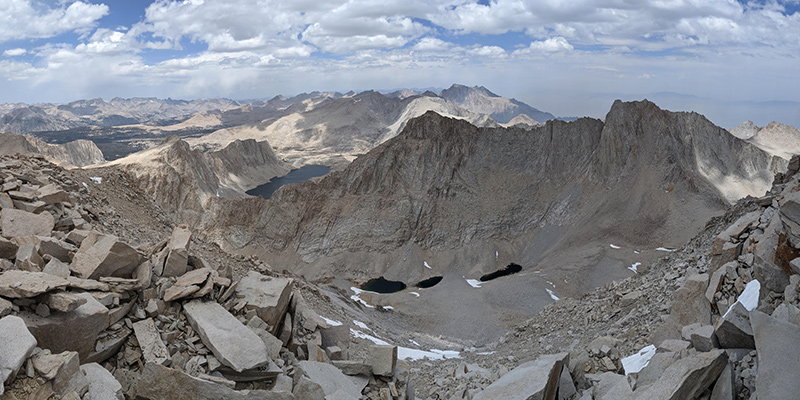
Views to the north towards Wales Lake were equally spectacular.
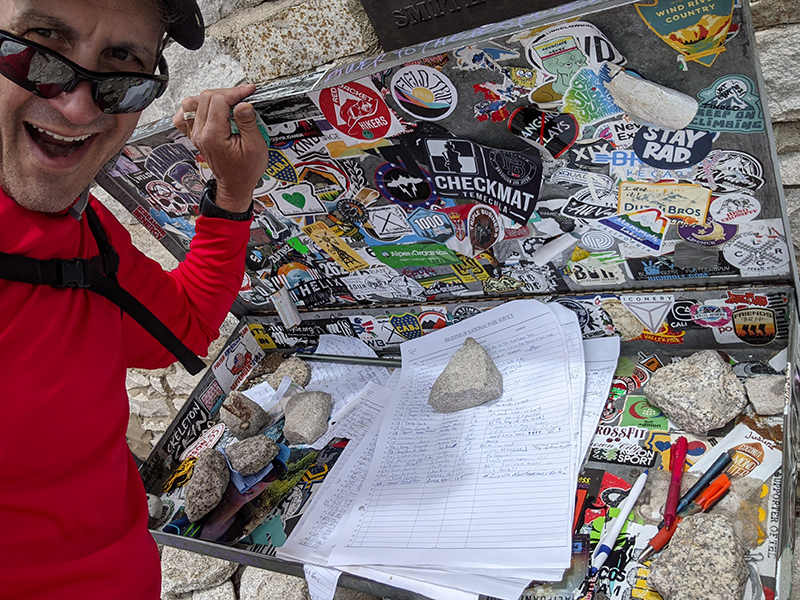
We signed the summit register and started making our way down.
The Descent
The snow had softened up by then, and post-hole plunge-stepping was unavoidable.
Back at Iceberg Lake, we broke camp and decided to pack out after noticing our neighbors had already left. This picture is through the moraine below Pinnacle Ridge that I pointed out from the summit.
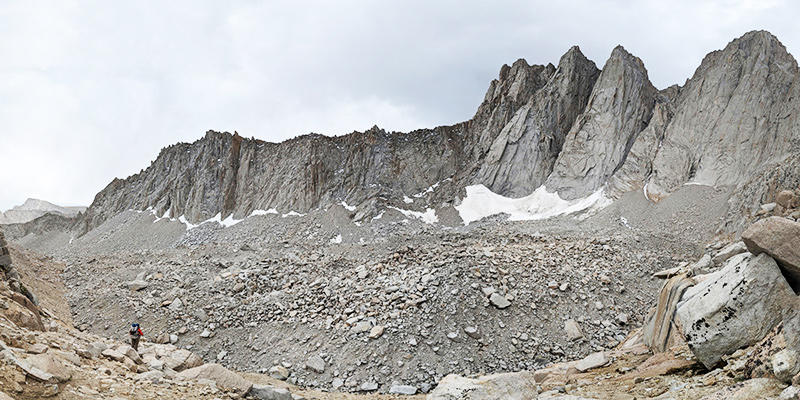
It’s hard to capture how impressive this section really is.
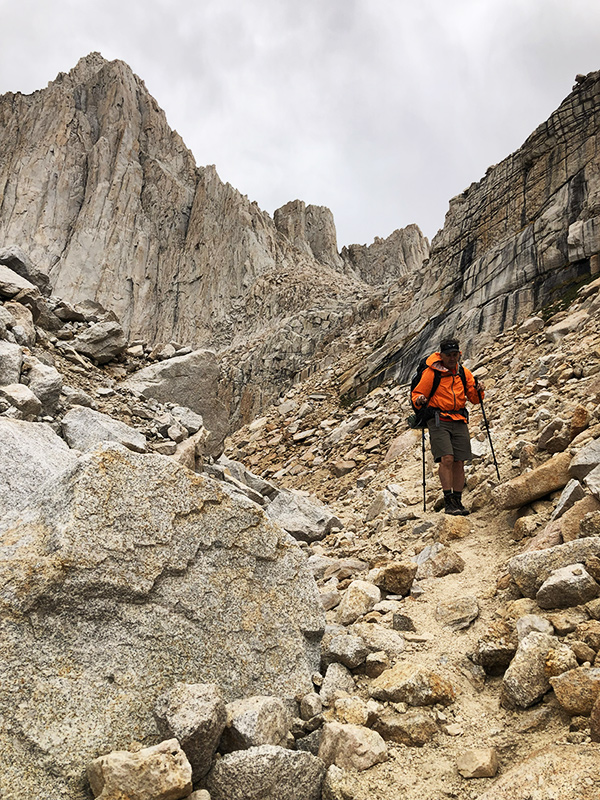
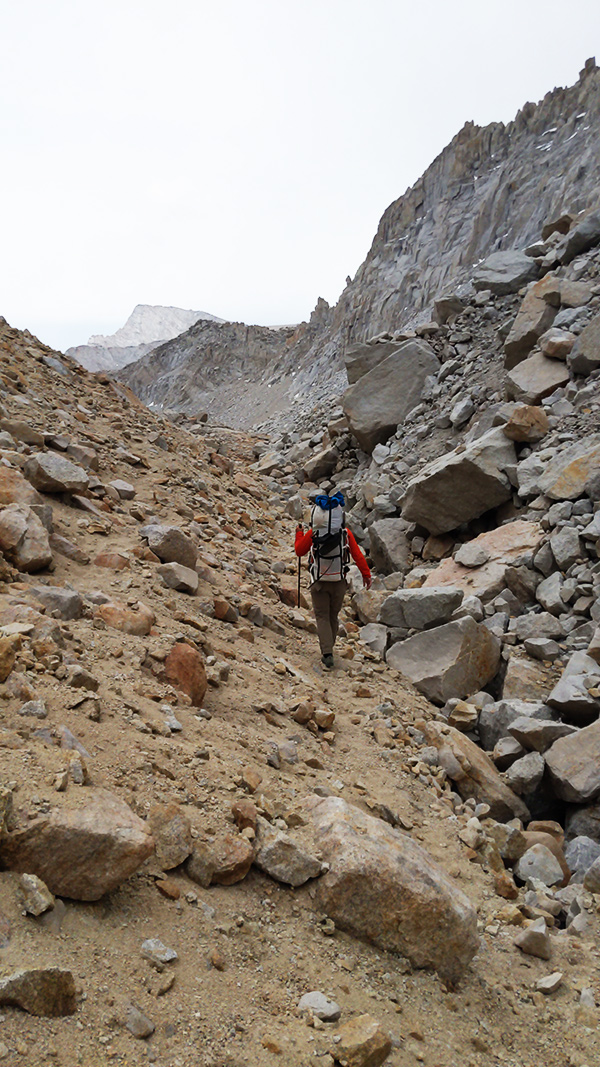
Not knowing whether fire danger was still an issue, we kept our eyes open and assessed things as we went. Worst-case scenario, we’d just set up camp again mid-mountain.
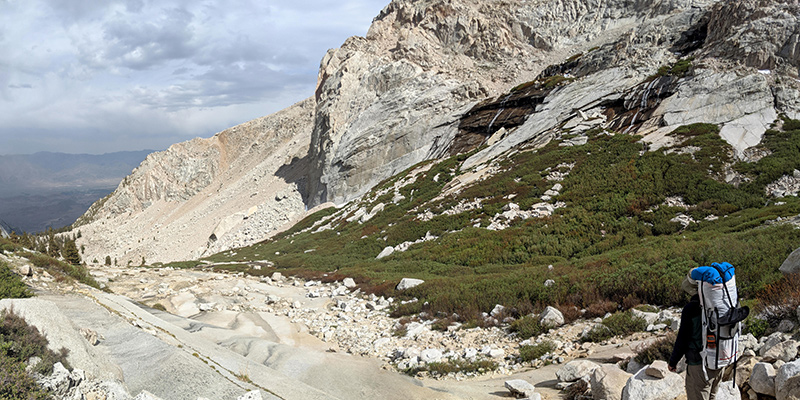
At least we had plenty of water if we ended up staying longer than expected.
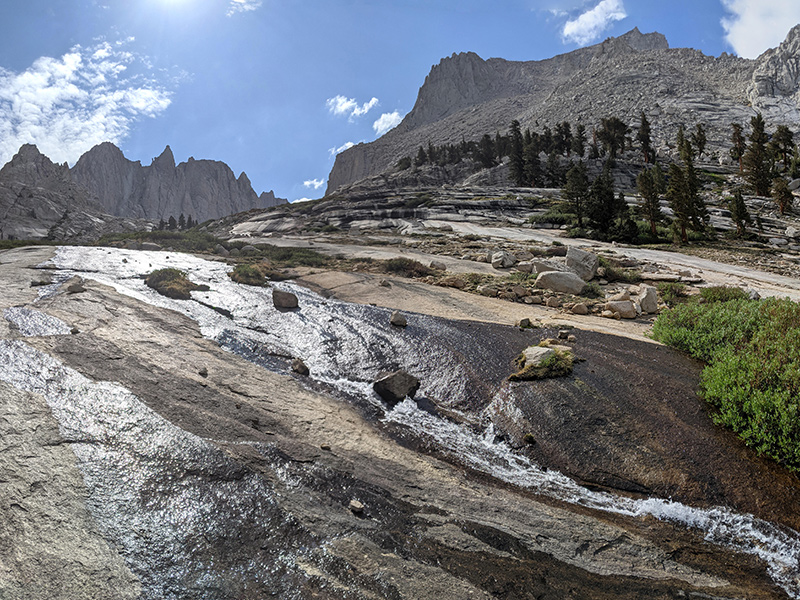
Still no signs of danger at Lower Boy Scout Lake.
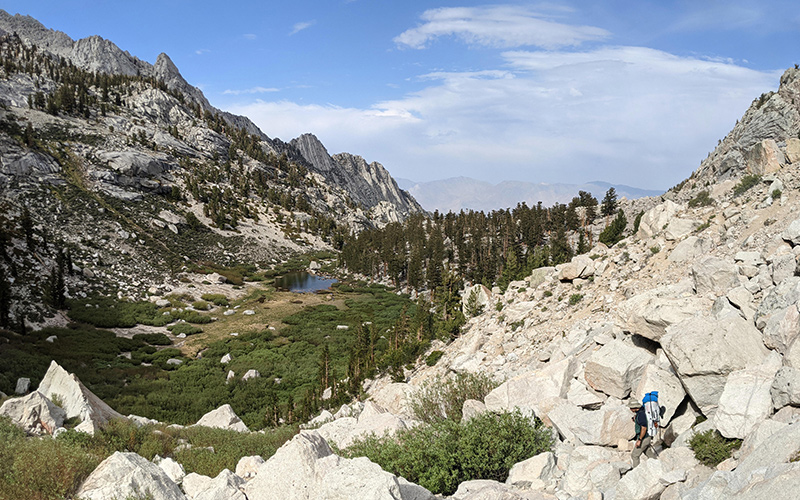
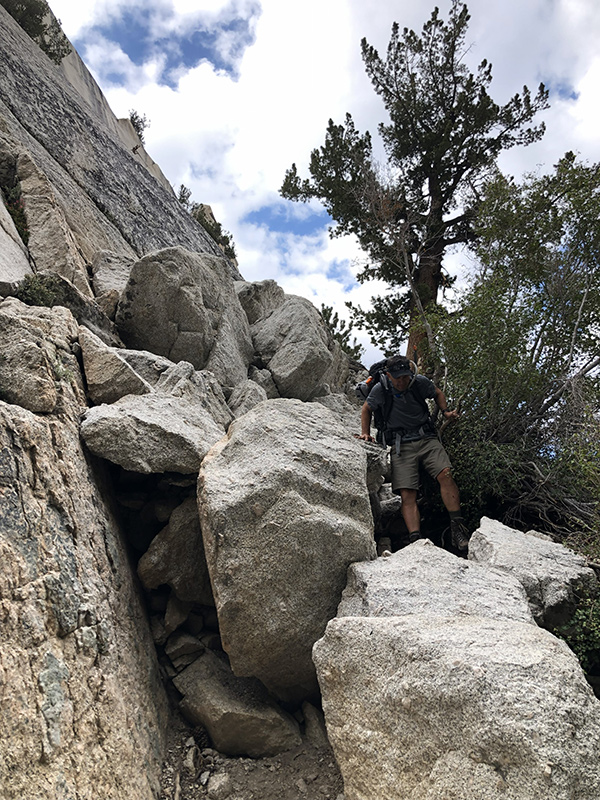
Nothing ablaze at as we approached Ebersbacher Ledges.
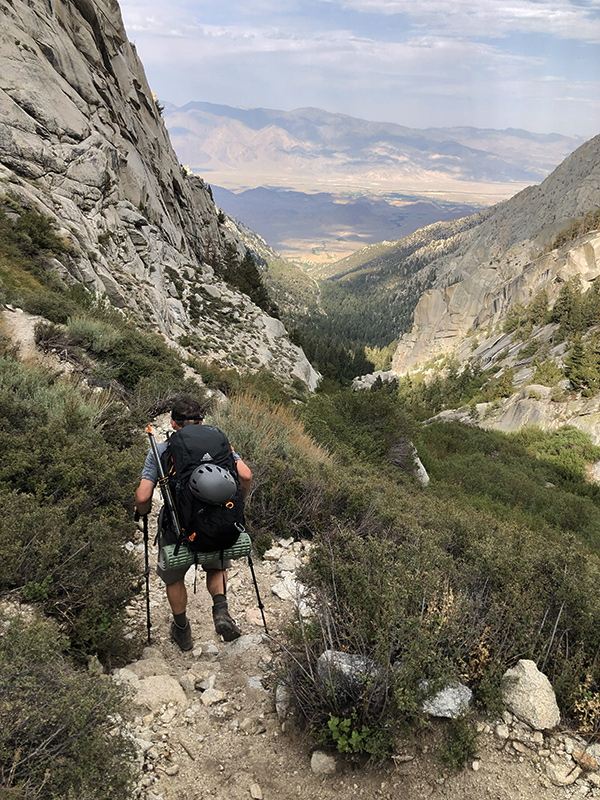
Down off the ledges and about to hit the home stretch.
Back at the trailhead, several cars were still parked there, none showing any damage, including ours. It wasn’t until we drove out that we saw where the fire had been.
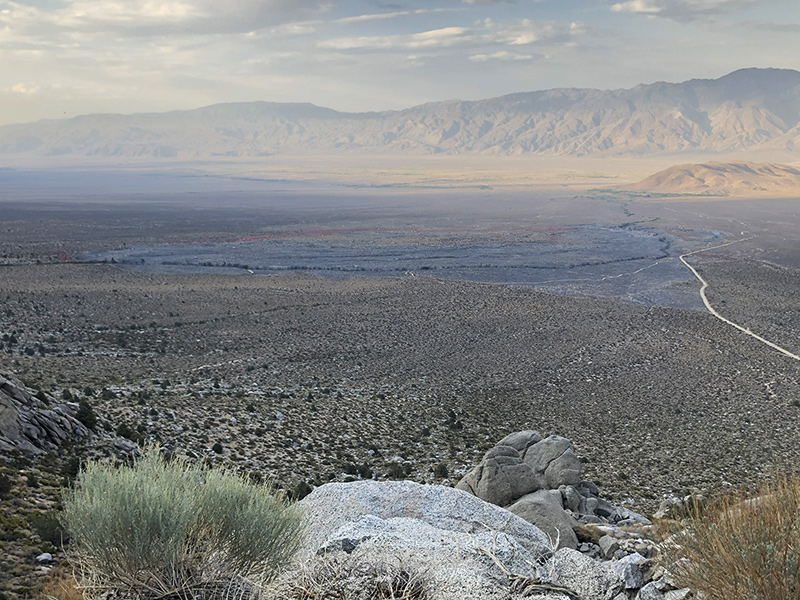
The Forest Service didn’t want anyone heading up the road with this sign flashing “WHITNEY CLOSED”.
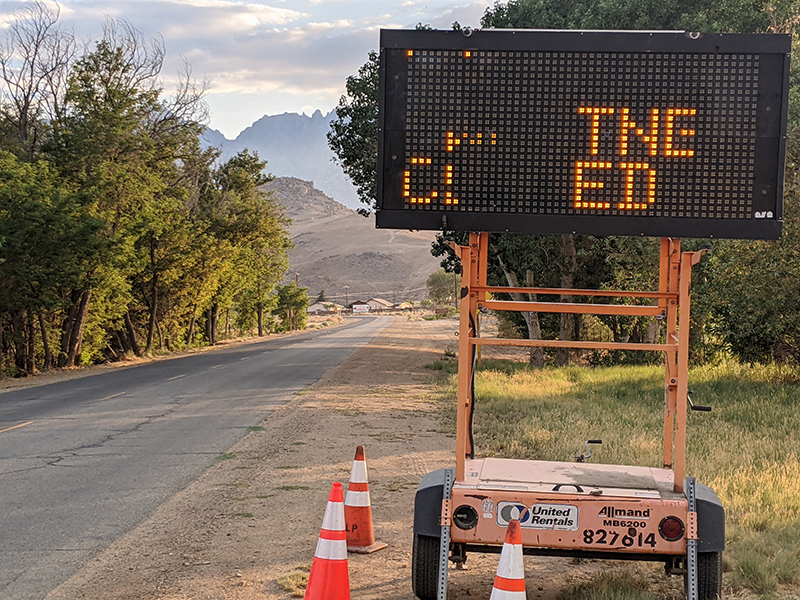
Not sure if anyone proceeded anyway. Luckily, we missed this unfortunate closure by just one day.
Overall stats for the trip:
| LEG | DISTANCE (mi) | ELEVATION GAIN (ft) |
| Trailhead to Iceberg Lake | 5.18 | 4,520′ |
| Iceberg Lake to summit | 1.24 | 1,829′ |
| Summit to Iceberg Lake | 1.38 | 59′ |
| Iceberg Lake to trailhead | 4.26 | 127′ |
| TOTAL | 12.06 | 6,535′ |